Explainer
Airline Codes Explained: IATA vs ICAO Codes and Callsigns
Your boarding pass says AA 100 from DFW, the flight tracker says AAL100 near KDFW, and the pilot is talking to the tower as "American 100". They are all the same flight. Here is how IATA codes, ICAO codes and radio callsigns fit together, with tables for the big US airlines and airports.
Key takeaways
- Airlines have two codes: a two-character IATA designator used in flight numbers and tickets (American is AA, Southwest WN), and a three-letter ICAO designator used by air traffic control and flight tracking (AAL, SWA).
- A radio callsign is the spoken version of the ICAO designator, set out in the FAA's list of designators: AAL is "AMERICAN", SWA is "SOUTHWEST", ASA is "ALASKA".
- Airports also have two codes: a three-letter IATA code (DFW, LHR) and a four-letter ICAO code (KDFW, EGLL). In the contiguous US, the ICAO code is usually K plus the three-letter code; Alaska and Hawaii use codes starting PA and PH.
- Regional flights sold under a big airline's name are often flown by another carrier and appear on flight maps under that carrier's ICAO code, for example SKW for SkyWest or ENY for Envoy.
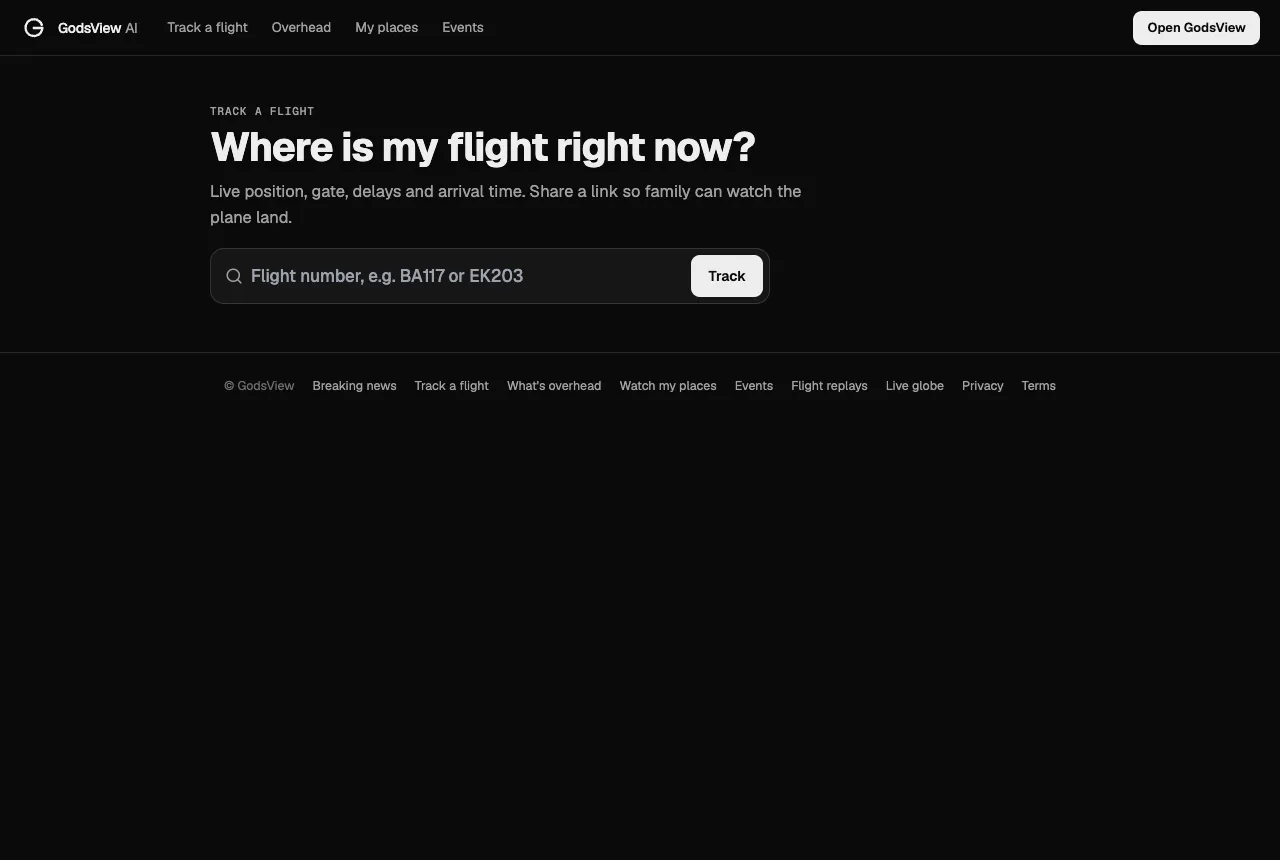
- To find your flight on a live map, start with the number on your ticket in a flight lookup, then match the ICAO callsign on the map.
Airline codes come in two sets. The two-character IATA code is the one on your ticket and in the flight number, such as AA for American Airlines or WN for Southwest. The three-letter ICAO code is the one air traffic control and flight trackers use, such as AAL for American or SWA for Southwest. So flight AA 100 on your boarding pass appears as AAL100 on a flight map, and pilots say "American one hundred" on the radio. Airports work the same way: Dallas/Fort Worth is DFW to travelers and KDFW in aviation systems.
Knowing both sets is the difference between finding your plane in seconds and staring at a map full of unfamiliar letters. This guide explains who assigns each code, how to read a flight number and a callsign, and why a flight sold by one airline can show up on the map under another's code.
IATA vs ICAO: the quick difference
| IATA code | ICAO code | |
|---|---|---|
| Who assigns it | The International Air Transport Association, the trade association for the world's airlines | The International Civil Aviation Organization, a United Nations agency; the FAA publishes the designators in Order JO 7340.2 |
| Airline code | 2 characters, e.g. AA, WN, AS | 3 letters, e.g. AAL, SWA, ASA |
| Airport code | 3 letters, e.g. DFW, SEA | 4 letters, e.g. KDFW, KSEA |
| Where you see it | Tickets, booking sites, airport departure boards, flight numbers | Flight plans, air traffic control, NOTAMs, ADS-B callsigns on flight trackers |
| Spoken form | None | A radio callsign (telephony designator), e.g. "AMERICAN" |
IATA's own code search describes its tool as "an official source for codes assigned by IATA", for two-letter airline codes and three-letter airport codes. It also notes that some airline codes are controlled duplicates: two carriers share one code because they operate different, non-overlapping services, marked with an asterisk.
The FAA's Order JO 7340.2 carries the ICAO three-letter company designators and their telephony designators for every airline and operator that has one, from major carriers to air ambulance and military units.
How to read a flight number
A flight number has two parts: the airline's IATA code and a number. AA 1234 means American Airlines flight 1234. WN 22 is Southwest flight 22. The number identifies the scheduled flight, not the aircraft, so the same flight number can be flown by a different plane on another day.
On the map, the flight's callsign usually swaps the IATA code for the ICAO code: AA 1234 becomes AAL1234, WN 22 becomes SWA22. Our guide on what a flight call sign is covers the exceptions, such as callsigns that use letters or a different number from the ticket.
Then there are two identifiers that belong to the aircraft, not the flight:
- Registration (tail number): painted on the aircraft, such as N-numbers in the United States. See how to track a plane by tail number.
- ICAO 24-bit address (hex code): a six-character code the transponder broadcasts, which trackers use to identify the airframe.
Airline codes for major US airlines
These come from IATA's code search and the FAA's list of ICAO designators, checked in November 2026.
| Airline | IATA | ICAO | Radio callsign |
|---|---|---|---|
| American Airlines | AA | AAL | AMERICAN |
| Delta Air Lines | DL | DAL | DELTA |
| United Airlines | UA | UAL | UNITED |
| Southwest Airlines | WN | SWA | SOUTHWEST |
| Alaska Airlines | AS | ASA | ALASKA |
| Hawaiian Airlines | HA | HAL | HAWAIIAN |
| Horizon Air | (sold as Alaska) | QXE | HORIZON AIR |
| SkyWest Airlines | (sold as partners' brands) | SKW | SKYWEST |
| Envoy Air | (sold as American Eagle) | ENY | ENVOY |
| PSA Airlines | OH | JIA | BLUE STREAK |
| Piedmont Airlines | (sold as American Eagle) | PDT | PIEDMONT |
| Republic Airways | (sold as partners' brands) | RPA | BRICKYARD |
Two things stand out. First, the ICAO code is often an obvious abbreviation (AAL, UAL), but not always: Southwest's IATA code WN looks nothing like SWA, and PSA's callsign "BLUE STREAK" has nothing to do with its name. Second, some three-letter codes look like airports. DAL is Delta's ICAO airline code and also the IATA code for Dallas Love Field. Context tells you which: a callsign is letters followed by a flight number.
For airline-by-airline tracking tips, see our guides for American Airlines, Southwest, Alaska Airlines, United and Delta.
Regional flights and codeshares
Many flights sold by a large airline are flown by a regional partner. American Airlines' 2025 annual report says its regional flights operate as American Eagle, flown by its own subsidiaries Envoy, PSA and Piedmont and by third-party carriers Republic and SkyWest. Alaska Air Group's report says its regional flying is done by Horizon and SkyWest on Embraer E175 jets.
On your ticket these flights carry the big airline's code, and the American Eagle carriers use American's logos and paint schemes. On a flight map the callsign usually belongs to the airline actually flying it, such as ENY, JIA or SKW. If you search the map for "AAL" and cannot find your regional flight, search the flight number on Track a flight instead, which takes the number from your ticket.
A codeshare is different: one flight carries several flight numbers from partner airlines. The callsign on the map belongs to the operating airline, so search the operating carrier's flight number when you can.
Airport codes: IATA vs ICAO
Airports have a three-letter IATA code and a four-letter ICAO code. These examples are from the US Aviation Weather Center's airport data:
| Airport | IATA | ICAO |
|---|---|---|
| Dallas/Fort Worth International | DFW | KDFW |
| Dallas Love Field | DAL | KDAL |
| Seattle-Tacoma International | SEA | KSEA |
| Los Angeles International | LAX | KLAX |
| Hartsfield-Jackson Atlanta International | ATL | KATL |
| Charlotte Douglas International | CLT | KCLT |
| Ted Stevens Anchorage International | ANC | PANC |
| Daniel K. Inouye International, Honolulu | HNL | PHNL |
| London Heathrow | LHR | EGLL |
| Toronto Pearson | YYZ | CYYZ |
In the contiguous United States the ICAO code in these examples is simply K in front of the three-letter code. Alaska and Hawaii start with PA and PH, and in other countries the ICAO code can look quite different from the IATA code, as Heathrow's EGLL shows. In US NOTAMs, domestic notices use the three-letter identifier (for example, BNA for Nashville), while international-format NOTAMs give the ICAO location in field A. Our NOTAM explainer shows examples.
Cities with several airports
IATA's search for "Dallas" returns Dallas/Fort Worth International (DFW), Love Field (DAL), Executive (RBD) and Addison (ADS). If a booking site says "Dallas", check which one you are flying from.
Common airline code mix-ups
A few codes trip people up again and again:
- WN is Southwest. The two-letter code has nothing to do with the name; the three-letter SWA does.
- Callsigns are not always names. PSA Airlines flies as "BLUE STREAK" and Republic Airways as "BRICKYARD", according to the FAA's list. If you hear an unfamiliar callsign on an air traffic control feed, look it up in that list.
- The same letters can belong to different companies. FAA's list includes ASA for Alaska Airlines, but "ASA PESADA" is the telephony designator of a different company in Angola. Always read the whole callsign together with the flight number.
- Controlled duplicates. IATA marks codes that two airlines share for non-overlapping services with an asterisk, so check the airline name, not just the code.
- Regional flights. An AA, AS or UA flight number flown by a partner shows up under the partner's ICAO code.
Using codes on a live flight map
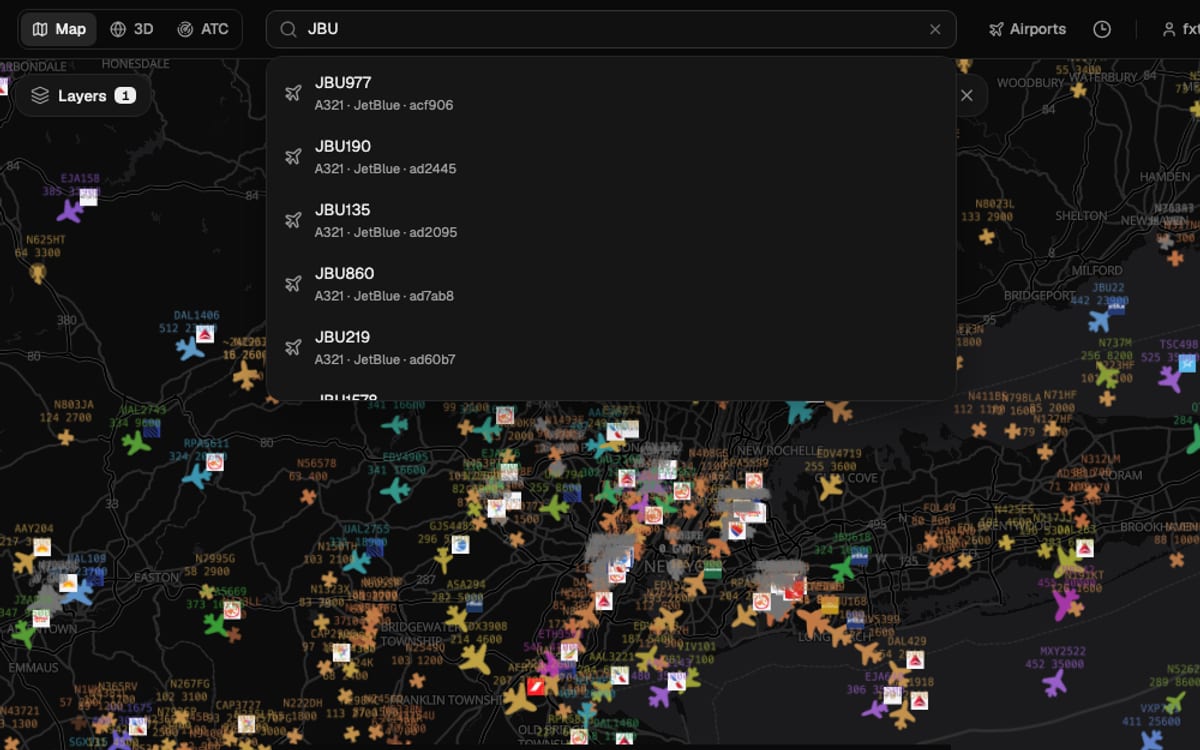
On GodsView, the quickest route depends on what you know:
- You have a flight number. Type it into Track a flight, for example AA 1234 or WN 22. The page matches it to the live aircraft.
- You know the airline. Open the live flight tracker and type the ICAO code, such as AAL, SWA or ASA, to list that airline's flights in the air.
- You know the airport. Open an airport page such as DFW, SEA or ATL to see live traffic around the field.
- You see a plane overhead. What's overhead or a city page such as planes over Dallas lists nearby aircraft with callsigns.
Other codes you may run into
- Aircraft type designators are short codes for the aircraft model that flight cards show alongside the callsign.
- Squawk codes are four-digit transponder codes such as 7700 for an emergency; see our squawk codes list.
- The T prefix: the FAA's AIM says air taxi operators flying under Part 135 without an assigned three-letter designator prefix the registration with "T" in their flight plan, for example TN1234B.
The short version
IATA codes are for passengers: two characters for airlines (AA, WN, AS) and three letters for airports (DFW, SEA). ICAO codes are for aviation systems: three letters for airlines (AAL, SWA, ASA) and four for airports (KDFW, KSEA). Callsigns are the spoken form of the ICAO code plus the flight number. Regional flights often show up under the operating carrier's code. Search your ticket number first, then match the callsign on the map.
Frequently asked questions
What is the difference between IATA and ICAO airline codes?
IATA codes have two characters and are used in flight numbers and tickets, such as AA for American. ICAO codes have three letters and are used by air traffic control and flight trackers, such as AAL for American.
Why does my flight show a different code on the flight tracker?
Trackers show the ICAO callsign the aircraft broadcasts. AA 1234 on your ticket usually appears as AAL1234. If a regional partner flies it, the map may show that carrier's code, such as SKW or ENY.
What is Southwest's airline code?
Southwest's IATA code is WN and its ICAO code is SWA, with the radio callsign "SOUTHWEST".
What is the ICAO code for an airport?
A four-letter code used in aviation systems. Dallas/Fort Worth is KDFW, Seattle-Tacoma is KSEA, Anchorage is PANC, Honolulu is PHNL and London Heathrow is EGLL.
What is a callsign?
The name used on the radio and in ADS-B broadcasts. For airlines it is the telephony designator plus the flight number, such as "AMERICAN 100", shown on maps as AAL100.
Is DAL Delta or Dallas Love Field?
Both. DAL is Delta's three-letter ICAO airline code and also the IATA airport code for Dallas Love Field. A callsign such as DAL123 means a Delta flight; DAL on a ticket as the airport means Love Field.
Sources
- IATA — Airline and airport code search
- IATA — About us
- ICAO — About ICAO
- FAA Order JO 7340.2, Chapter 3 — ICAO three-letter designators and telephony designators
- NOAA Aviation Weather Center — airport data (ICAO, IATA and FAA identifiers)
- American Airlines Group — 2025 Form 10-K (American Eagle carriers)
- Alaska Air Group — 2025 Form 10-K (regional operations)
- FAA Aeronautical Information Manual, Chapter 5 Section 1 (flight plans, NOTAM format)
Facts checked on against each provider's own site.